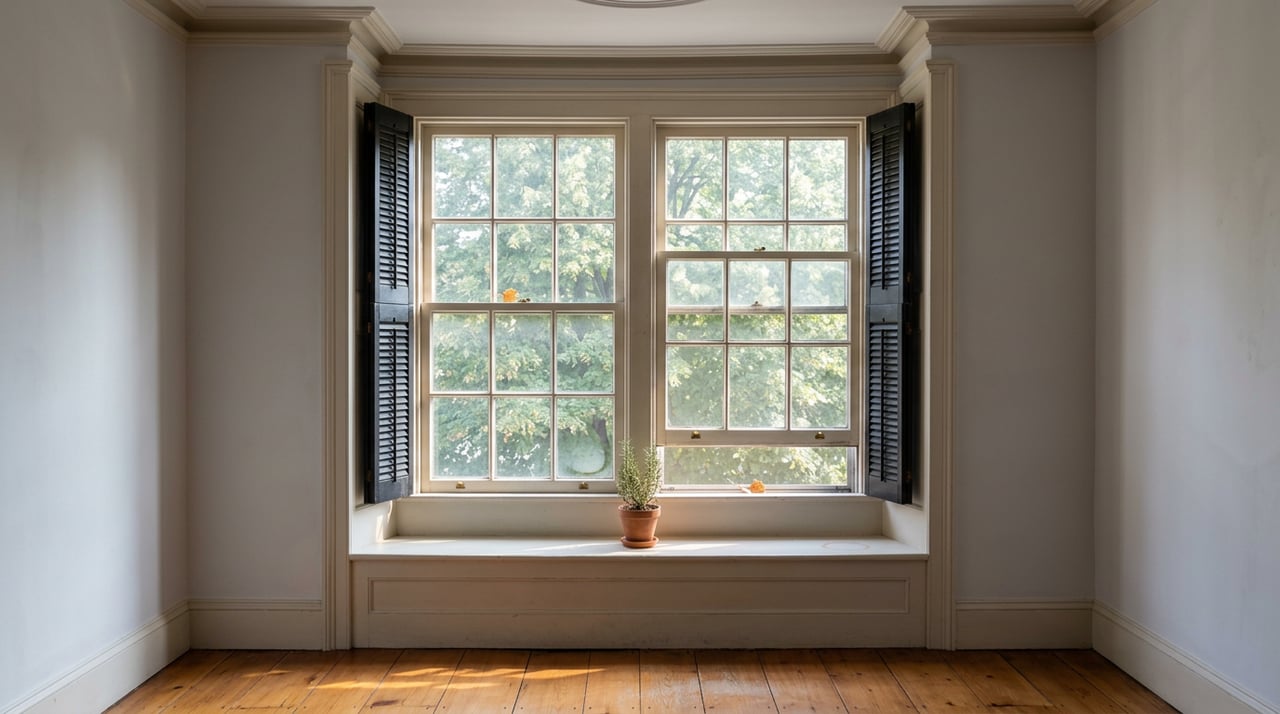
A buyer under agreement on a Beacon Hill townhouse usually pencils in the same line item: new windows, upgraded to something efficient, somewhere in the first eighteen months of ownership. It reads like a design decision. Pick a manufacturer, pick a finish, move on.
The commission that actually rules on that window disagrees. Look at what it has approved this year and a pattern holds with almost no exceptions: wood sash, true divided lights, and the phrase that keeps showing up on the same line as the glass spec: no low-E glass.
What the Record Actually Says
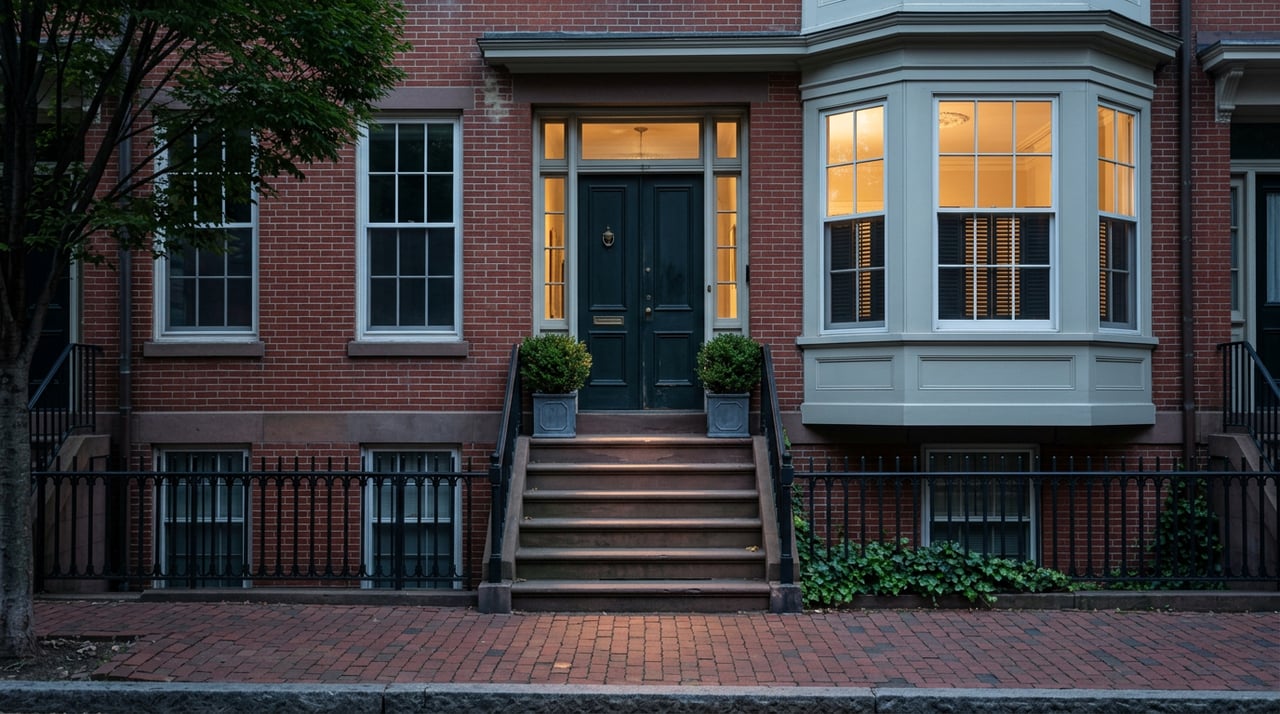
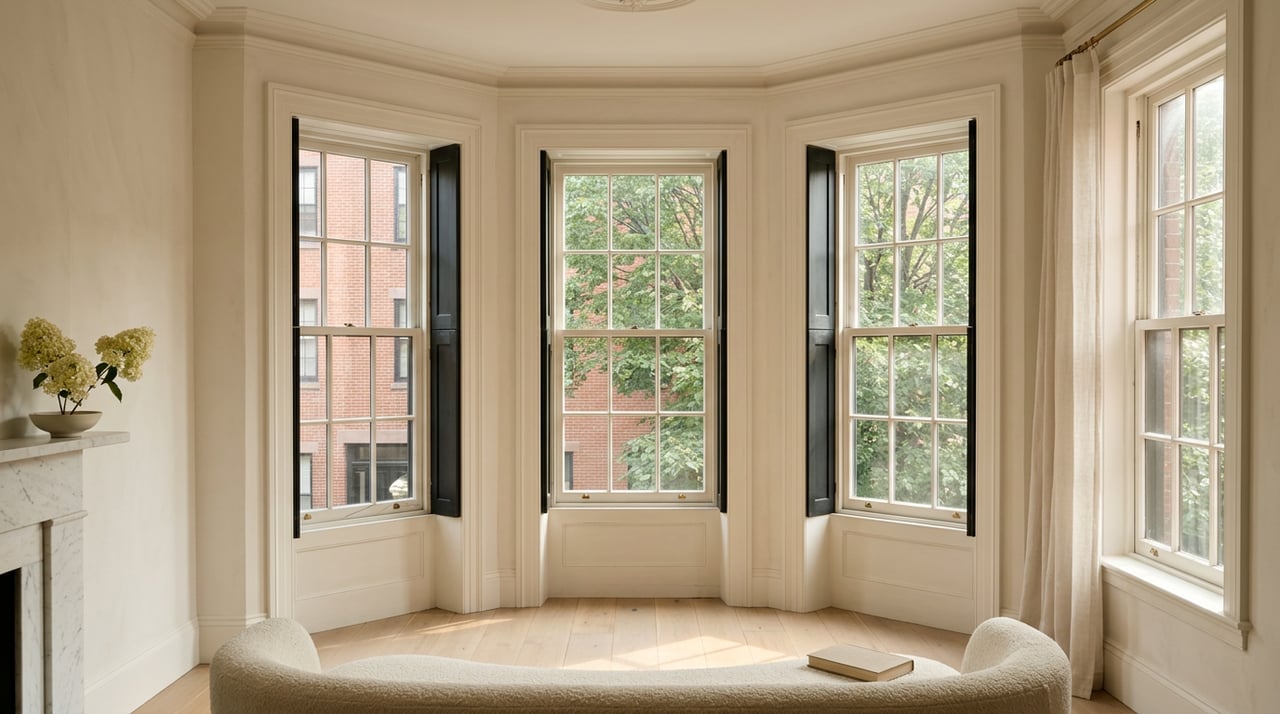
Pull the Beacon Hill Architectural Commission's public hearing agenda from May 21, 2026, and the pattern is right there in the applications. At 107 Charles Street, the front-facade sash replacement was approved as six-over-six, all wood, no low-e glass, true divided light, curved sash windows with spacer bars that match the color of the window sash. At 64 Chestnut Street, a full window replacement was approved as all wood, true divided light windows, with no low-e glass and spacer bars that match the color of the window frame. Even a manufacturer swap at 9 Louisburg Square, where the windows had already been approved once, still had to come back specifying that the windows will be all wood, true divided lights with no low-e glass. At 43 Mount Vernon Street, the commission went further and dictated the exact profile: a 13/16" interior profile width muntin, 3/16" exterior wood stem and glazed.
This isn't a 2026 tightening. Go back to April 2024 and the same clause governs a window job at 63-64 Beacon Street, where the approved replacement kit was nine existing deteriorated windows replaced with a BROSCO authentic divided light single pane, wood sash, double hung with 5/8 inch wood muntin, and the windows will not have a low-e coating. The guideline language behind all of it is public. The commission's own standards state that single glazing is appropriate for multi-light replacement windows, and clear, insulated glass may be permitted only if the width of the replacement muntin matches the width of the historic muntin. A separate section rules out the coated glass that makes most modern low-E units work in the first place: only clear, non-tinted glass shall be used, and mirrored and tinted heat-reflective glass is not appropriate, nor are any other glazing materials with color or reflective properties different from clear glass.
Low-E coatings are, by design, reflective at a molecular level. That's the mechanism the guideline is written to exclude.
The Boundary Is Wider Than the Property Line
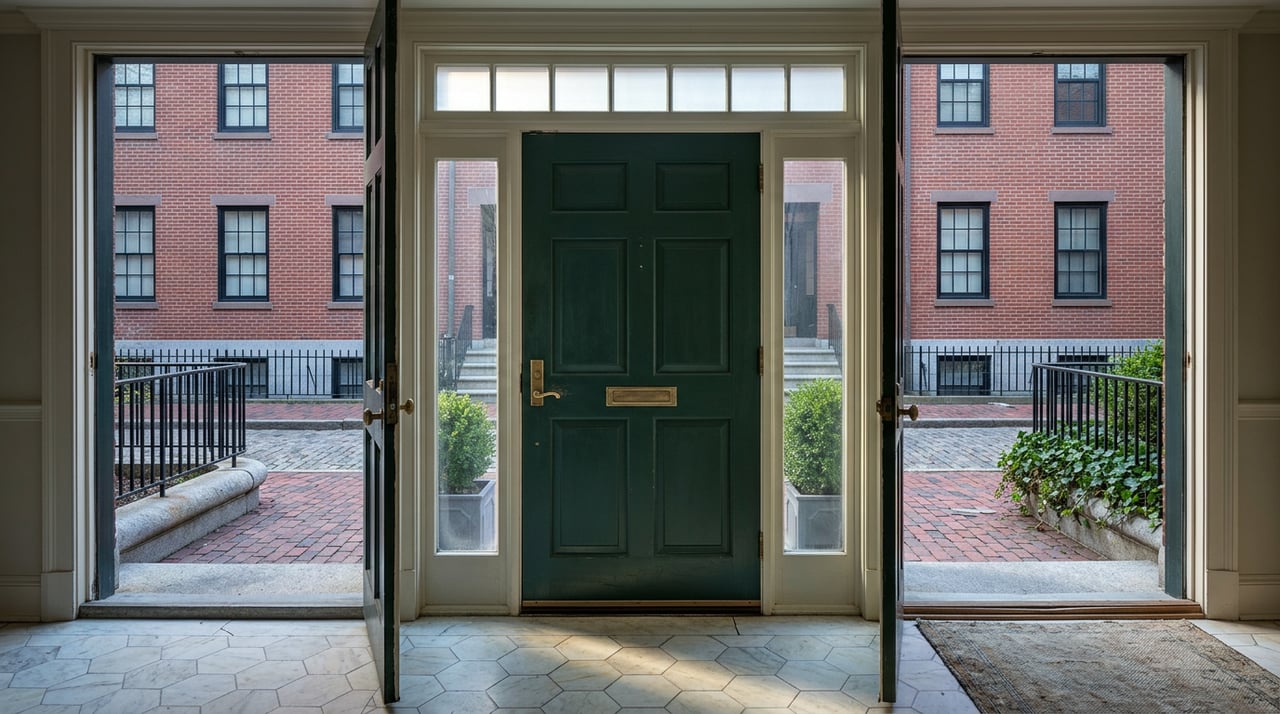
Buyers who plan to save the energy-efficiency argument for the back of the house should know the review area doesn't stop at the front door. The commission's authority covers all exterior work visible from a public way, and that definition is broader than most people assume: it includes views from the Boston Common, the Boston Public Garden, Storrow Drive, the Charles River Esplanade, and the Longfellow Bridge. A rear elevation that faces none of those landmarks might still fall under review if it faces a public alley or a neighboring courtyard. The November 2025 approval at 8 West Hill Place bears this out: even a rear-facing replacement was specified as all wood, double hung, true divided lights with no low-e glass.
Three Tracks, One Calendar
Not every application gets the same scrutiny, and knowing which track a project falls into changes how a renovation timeline gets built.
| Review Type | What It Covers | What Happens |
|---|---|---|
| Administrative Review | Ordinary maintenance, repair, or replacement with minimal visual impact | Delegated to commission staff pending ratification at the monthly hearing; applicants need not appear |
| Design Review Hearing | New construction, additions, signage, significant alterations | Full commission vote at the monthly public hearing, often with attached provisos |
| Violation Review | Work already completed without a Certificate of Appropriateness | Retroactive ratification requested, sometimes denied or modified after the fact |
That third category isn't hypothetical. Recent agendas have included ratification requests for an unapproved security camera, vinyl decals, and signage lighting, and separately for unapproved store signage and an unapproved intercom system. Every one of those started as a homeowner or tenant deciding a small change didn't rise to the level of needing a permit.
The commission itself meets on a fixed schedule: the third Thursday of each month. Miss that window and a project waits four weeks for the next one. The city's own guidance is direct about sequencing: do not begin any work, or buy materials, until after you have received confirmation your project has been approved by the Commission. Once approval does arrive, it has a shelf life. The electronic building-permit application constitutes the Certificate of Appropriateness, valid for two years from the date of the approval letter. A renovation planned in phases, exterior work first and an addition later, needs to land inside that window or refile.
Interior work is the one exception to all of this. Interior changes do not require approval by the BHAC at all, which is worth knowing before a buyer assumes the entire renovation is subject to the same calendar.
When the Commission Says No
The stakes of getting this wrong scale with the project. On February 19, 2026, the commission unanimously denied without prejudice an ambitious redevelopment project planned for the site at the intersection of Charles and Cambridge streets, currently home to a CVS Pharmacy. The proposal, from RODE Architects, called for razing the existing single-story structure to make way for a five-story, mixed-use building with a stepped-back sixth-floor penthouse to conceal the enclosed mechanicals. A professionally designed, well-resourced project still went back to the drawing board.
The same hearing approved far smaller work with equal specificity. New signage for Willie's, an incoming pizzeria to 20 Charles St. replacing the recently closed Upper Crust pizza shop, was approved as a wood sign with carved lettering. Down the block, Sisley Paris Boutique's incoming shop at 31-33 Charles St. received approval for a new blade sign and three awnings carrying the company logo. Even a request to install new vestibule lights and mailboxes at 105, 107, and 109 Charles St. came with a proviso that the hardware match existing intercom finishes as closely as possible.
None of this is arbitrary. The Beacon Hill Architectural Commission is a division of the City of Boston's Environment Department, sharing offices and staff with the Boston Landmarks Commission, and it has held regulatory authority since 1955, when the Massachusetts General Court established the district by Chapter 616 of the Acts of 1955. It is a separate body from the Beacon Hill Civic Association, the neighborhood's volunteer preservation group, though the two work closely together on guidance for owners.
What This Changes About How You Budget
The practical effect of all this lands on the contractor line of a renovation budget before it ever touches design. A standard double-pane low-E replacement window, the kind most buyers price into a renovation estimate by default, is not the product the commission will approve on a front elevation or any facade visible from the Common, the Garden, Storrow Drive, the Esplanade, or the Longfellow Bridge. The approved alternative is custom millwork: true divided lights, uncoated glass, muntin depths specified to the sixteenth of an inch, sourced from suppliers named directly in the approved applications, like BROSCO's authentic divided light kits specified for the Beacon Street job. That's a smaller pool of manufacturers and installers than the general window-replacement market, and a smaller pool means longer lead times and higher per-unit costs than a buyer who hasn't done this research will expect.
For due diligence, that translates into a few concrete questions worth asking before an offer goes in on a property with renovation plans attached. Has the current owner filed for or completed any exterior work, and is there a Certificate of Appropriateness on file for it. Are there open violations, the kind that show up as ratification requests on a future agenda. And does the timeline for a planned renovation actually fit inside a monthly hearing calendar and a two-year certificate window, or does it need to be split into phases that get filed separately.
None of this makes a Beacon Hill renovation impossible. It makes the real cost of one a question of vendor selection and calendar discipline as much as design taste, which is a very different budget conversation than the one most buyers walk in expecting.
A Few Direct Questions
Does the commission review interior renovations? No. Interior changes do not require a Certificate of Appropriateness, only work visible from a public way.
How often can a project be heard? The commission holds its Design Review Hearing once a month, on the third Thursday. Minor maintenance items can move faster through staff-level Administrative Review without the applicant appearing.
What happens if a previous owner did exterior work without approval? It can surface later as a Violation Review item, requiring retroactive ratification, and unapproved work can carry fines up to $1,000 per day under the district's guidelines.
If you're weighing a Beacon Hill property with renovation in mind, the design plan is only half the underwriting. The other half is knowing which windows, doors, and finishes the commission has actually approved this year, and building your contractor list and your calendar around that record rather than around a standard renovation estimate. That's the kind of groundwork Penney + Gould does before a client ever makes an offer.