Ever wish you could understand Back Bay by walking it instead of reading about it? If you are drawn to architecture, streetscape, and the way a neighborhood reveals itself block by block, Back Bay offers one of Boston’s clearest lessons in urban design. This walk will show you how landscape, architecture, retail, and civic landmarks come together to create a place that feels both composed and lived in. Let’s dive in.
Why Back Bay Feels So Designed
Back Bay was once tidal flats, and its development began after a major land-reclamation effort that started in 1857 and eventually covered more than 450 acres. That origin matters because the neighborhood was not shaped by accident. It was planned as a coherent urban district, and you can still feel that intent in the rhythm of its streets and facades.
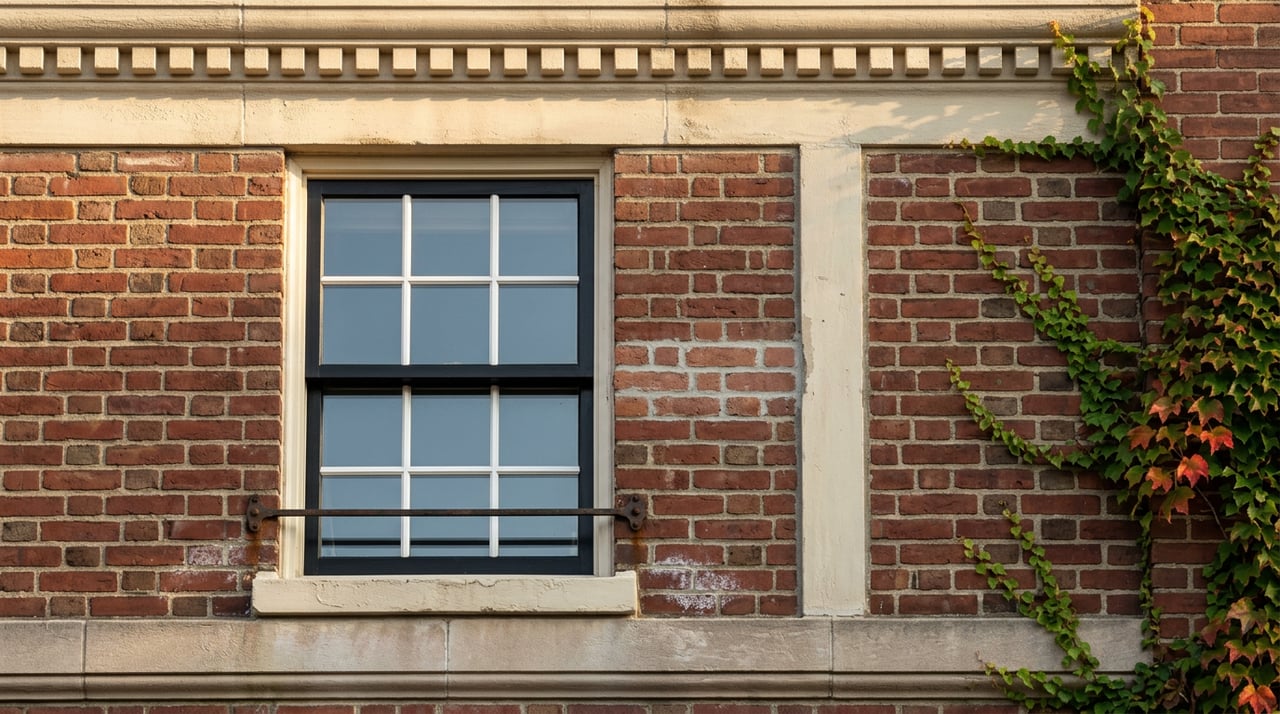
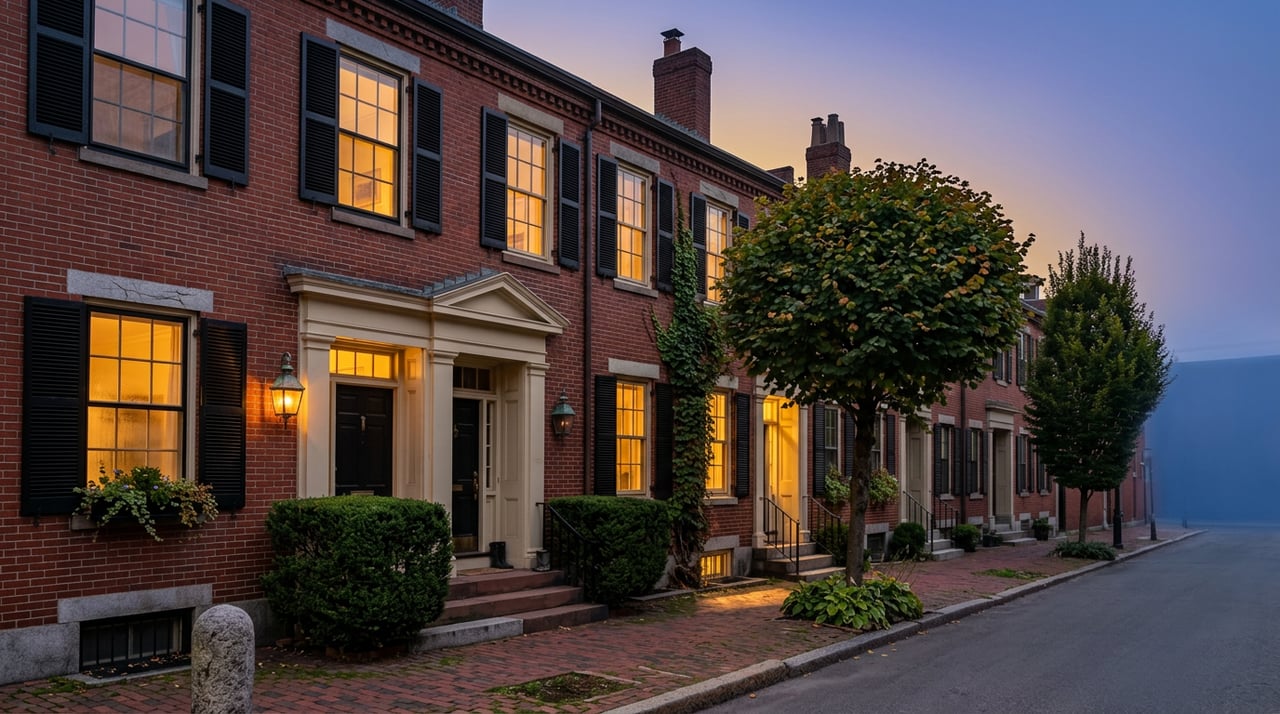
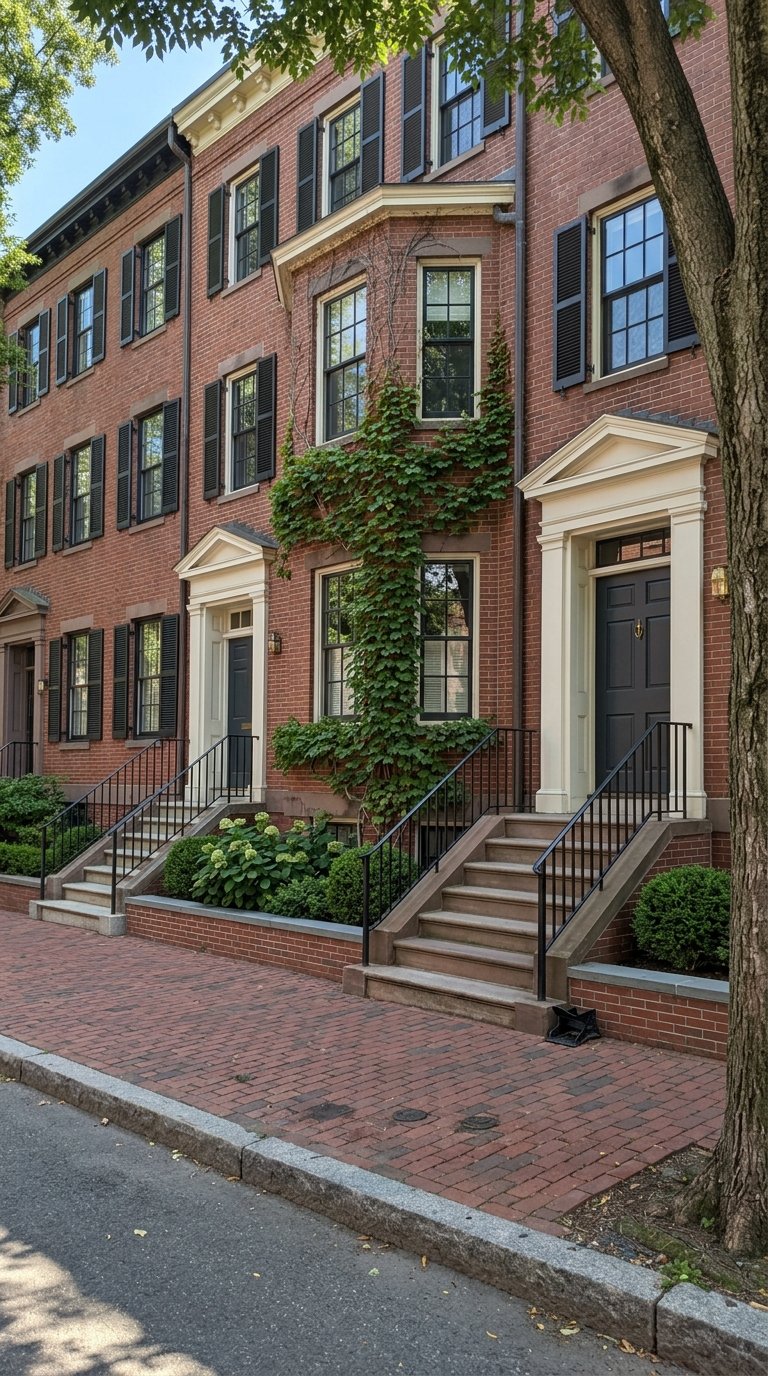
The Back Bay Architectural District, created by Massachusetts law in 1966, helps preserve that sense of order. Boston’s review guidelines emphasize continuous street walls, regular cornice lines, repeated bays and oriel windows, and the preservation of historic materials. For a design-minded walker, that means the neighborhood reads less like a collection of individual buildings and more like a carefully edited composition.
Boston also describes Back Bay as a place where block-by-block walks reveal changing tastes in American architecture from the mid-19th to the early 20th centuries. That is part of the appeal. You are not just seeing beautiful buildings. You are seeing a neighborhood that records how the city evolved.
Start at Commonwealth Avenue Mall
If you want the clearest introduction to Back Bay’s design language, begin on Commonwealth Avenue Mall. Designed in the French boulevard style in 1856, the Mall forms the central spine of the neighborhood and connects into the Emerald Necklace system. It is the landscape gesture that helps organize everything around it.
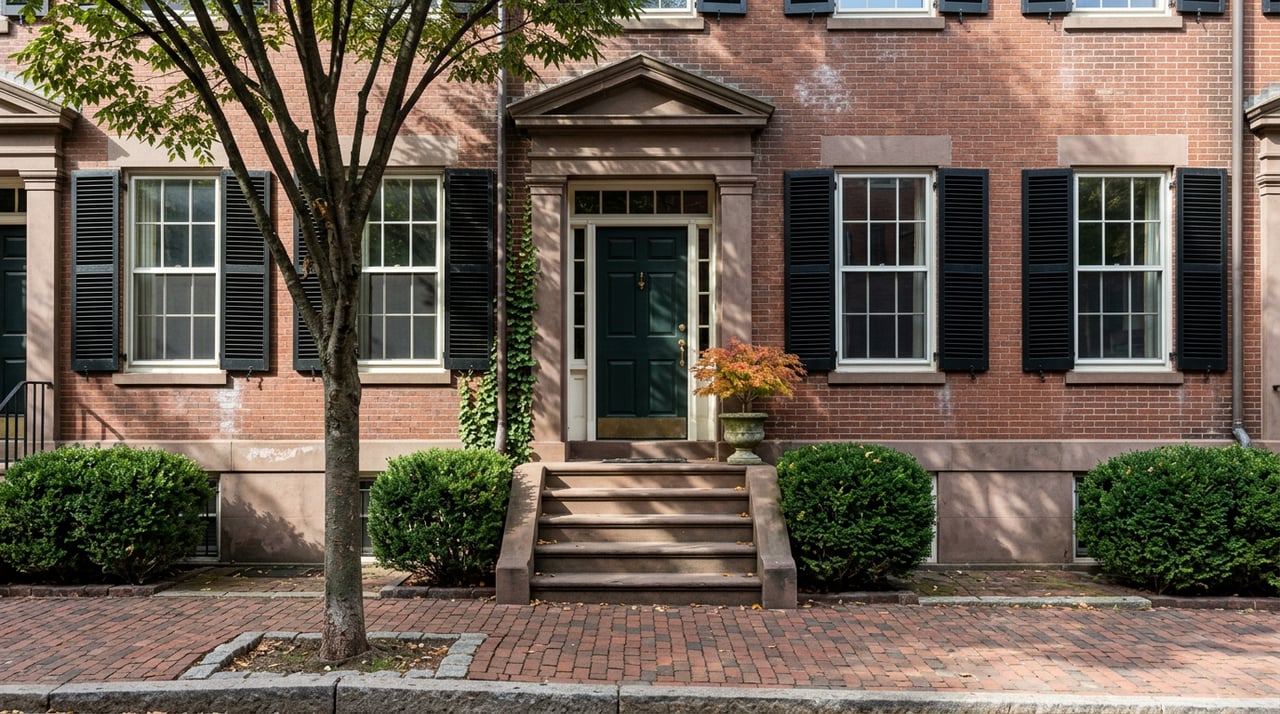
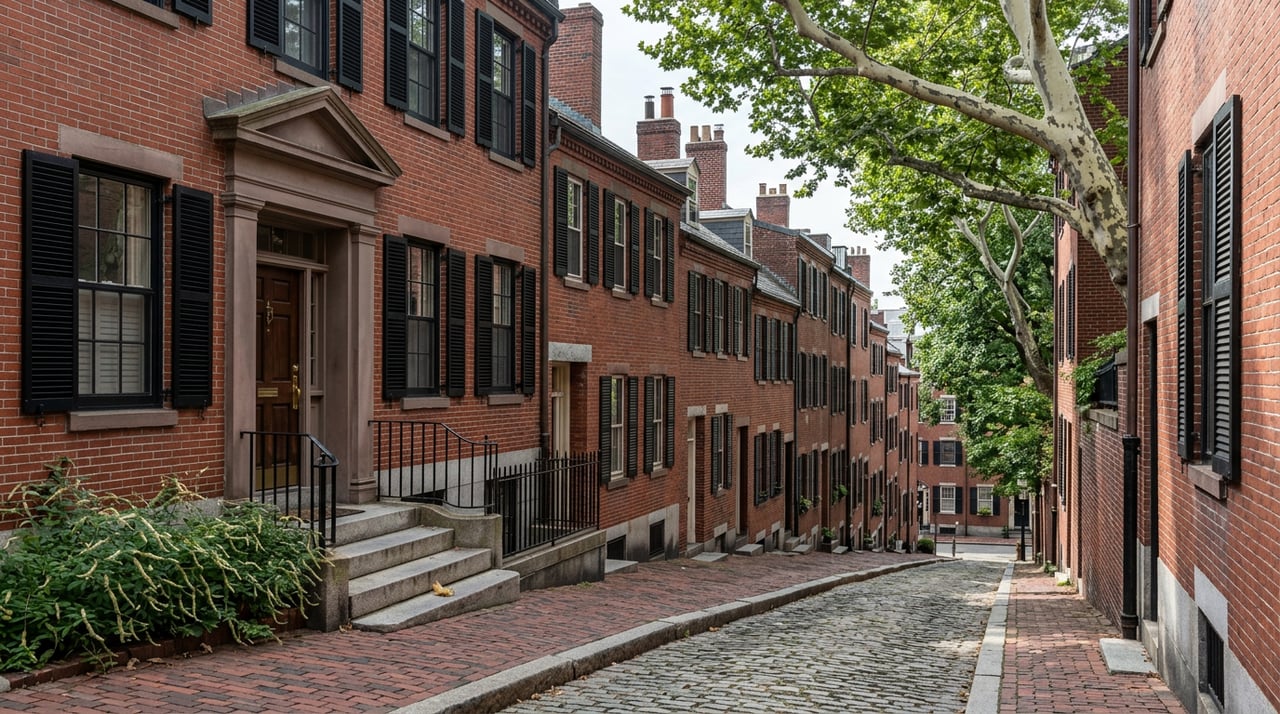
The National Park Service notes that the residential streets of Back Bay are among the best-preserved examples of late-19th-century urban landscape architecture in the country. That feels obvious once you are there. The tree-lined median, formal layout, and consistent rows of townhouses create a sense of proportion that is hard to miss.
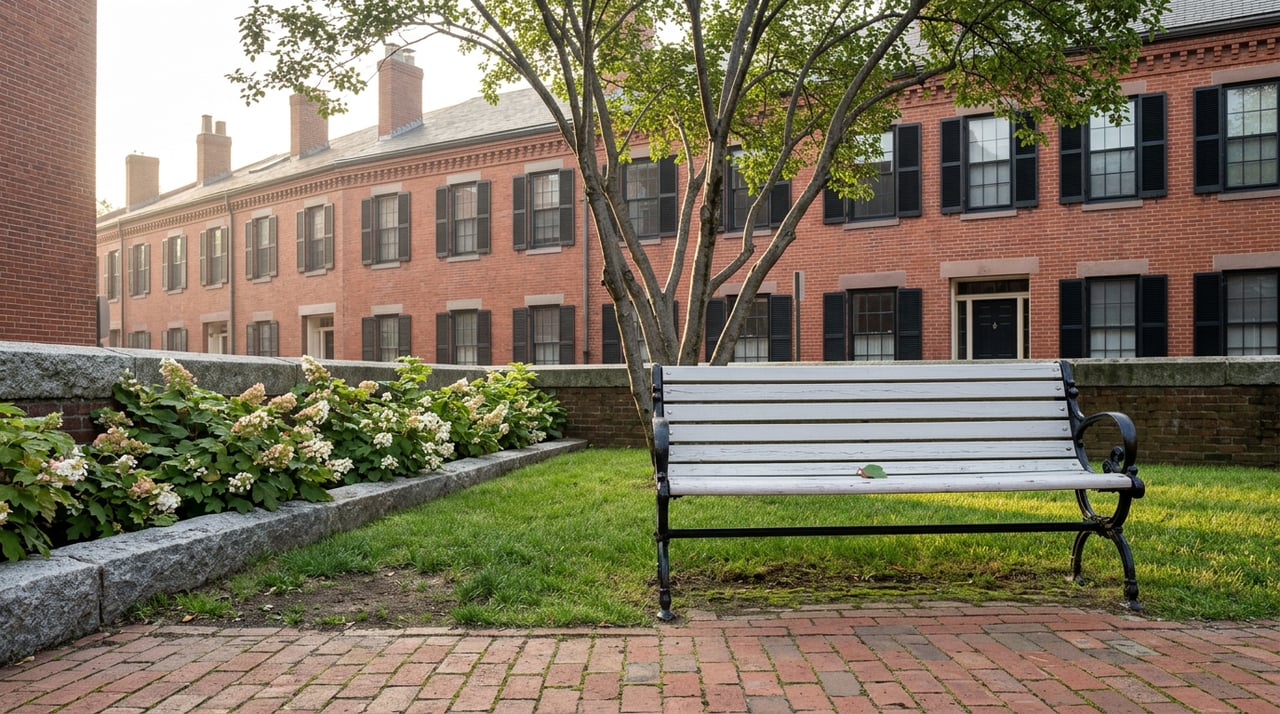
As you walk, pay attention to repetition. Facades align, cornices carry across buildings, and windows stack in a steady rhythm. Even where individual homes differ, the street still feels unified, which is one reason Back Bay remains so visually persuasive.
Look for Early Architectural Clues
Arlington Street Church is an excellent early stop. Dedicated in 1861 and described by the church as the first public building in Back Bay, it stands out with its 190-foot spire and Tiffany windows. It gives you an early hint that Back Bay was always meant to include more than private residences.
A little farther along, Beacon Street and the surrounding residential blocks show how domestic architecture contributes to the neighborhood’s identity. If you want an interior counterpart to the streetscape, the Gibson House Museum at 137 Beacon Street preserves four floors of period rooms and offers a rare view into domestic life from the mid-19th to early-20th centuries. It helps connect the exterior elegance of Back Bay to the lived reality inside its houses.
Continue to Newbury Street
From Commonwealth Avenue, the walk naturally shifts to Newbury Street. This is where Back Bay’s residential discipline meets retail energy. Boston describes Newbury as a mile-long, eight-block stretch of shops, salons, galleries, and restaurants, and it is the easiest place in the neighborhood to pair architecture with browsing and a café stop.
The city notes that commercial development began on Boylston Street around 1880 and on Newbury Street in the early 20th century. That timing helps explain why Newbury feels distinct from the quieter residential blocks nearby. The architecture still belongs to Back Bay, but the use of the buildings creates a different pace.
Newbury is also where the neighborhood feels most current. The storefronts change, but the street retains its architectural frame, which is a big part of its charm. You get the sense that contemporary retail here works best when it respects the existing streetscape.
Design Stops on Newbury Street
Aesop’s signature store at 128 Newbury Street is a useful example of a contemporary interior designed in conversation with its surroundings. For anyone interested in how modern brands adapt to historic contexts, it is a small but telling stop.
At 320 Newbury Street, the Boston Architectural College adds another layer to the walk. The college notes that its founders designed notable homes in Back Bay and Fenway, which makes the school a fitting presence in a neighborhood so closely tied to architecture and planning.
If you want a more relaxed pause, Trident Booksellers & Cafe at 338 Newbury Street has been part of the street since 1984 and remains an independent bookstore-cafe with a strong neighborhood identity. Newbury Comics at 348 Newbury Street adds a familiar local retail note, while Stephanie’s on Newbury at 190 Newbury Street works well for a coffee or lunch break with a direct view of street life.
Time Your Walk for Open Newbury
If your schedule allows, Open Newbury can make the experience even better. On selected summer Sundays and during a winter Holiday Stroll, the city closes Newbury Street to vehicle traffic from Berkeley Street to Massachusetts Avenue. When that happens, the corridor reads less like a shopping street and more like a promenade.
For a design lover, that change is meaningful. Without traffic in the foreground, you notice building fronts, upper stories, and spatial rhythm more clearly. It becomes easier to read the street as an urban design composition.
Pause at Copley Square
Copley Square is the hinge point of this walk. It brings together Back Bay’s residential fabric, institutional architecture, and commercial edges in one concentrated setting. If Commonwealth Avenue shows you the neighborhood’s formal landscape and Newbury shows you its social energy, Copley shows you its civic ambition.
Trinity Church anchors the square. The church was founded in 1733 and has stood in Copley Square since 1877. It describes the building as a National Historic Landmark, and the American Institute of Architects recognized it as one of the ten most architecturally significant buildings in the United States.
Across the square, the Boston Public Library’s Central Library adds another landmark layer. Its historic McKim building opened in 1895, and the library notes that the Central Library includes two landmark buildings and a collection of more than 23 million items. Together, these buildings make Copley one of the strongest places in Boston to see architecture as public life, not just backdrop.
What Copley Reveals About Back Bay
Copley Square makes Back Bay easier to understand as a whole. You can see how a planned residential district expanded to include major cultural institutions and active commercial corridors without losing its identity. That mix is one reason the neighborhood continues to appeal to people who want city living with visual depth and daily convenience.
For buyers at an early stage, this is often the point where Back Bay becomes more than a pretty address. It starts to feel like a neighborhood where architecture, walkability, and cultural access shape everyday life in a practical way.
Finish at the Mass Ave Edge
To see Back Bay’s next chapter, continue toward Massachusetts Avenue and the Prudential area. This edge shifts the walk from 19th-century streetscapes to larger-scale institutional and mixed-use architecture. The contrast is sharp, but it is also useful because it shows how the neighborhood adapted over time.
Symphony Hall at 301 Massachusetts Avenue opened in 1900 and was designed with scientifically derived acoustics. It is one of the area’s clearest examples of performance architecture and broadens the story beyond houses, churches, and libraries.
Nearby, the Mary Baker Eddy Library at 210 Massachusetts Avenue adds an interior-focused stop with the Mapparium experience. The library opened to the public in 2002, and it offers a material-rich counterpoint to the exterior character that defines so much of Back Bay.
The Prudential Center brings the walk into a larger commercial scale. It describes itself as a 3.6 million-square-foot mixed-use center with more than 70 shops and eateries, while nearby Copley Place adds another dense retail layer. By this stage of the route, you can clearly see how Back Bay accommodates both historic residential blocks and more intensive urban development.
What This Walk Tells You About Living Here
The strongest takeaway from a walk like this is not simply that Back Bay is beautiful. It is that the neighborhood feels layered in a way few urban districts do. Preservation rules, protected residential streets, retail corridors, and major cultural buildings all work together to create a setting that feels both polished and functional.
That combination matters if you are thinking about buying in Back Bay. You are not just choosing a building. You are choosing a daily experience shaped by walkability, architectural consistency, and access to institutions that give the neighborhood depth year-round.
For design-conscious buyers, this is often the real draw. Back Bay can feel like a weekend destination, but it also supports an everyday routine that includes a tree-lined walk, a café stop, a bookstore, a library visit, or an evening performance, all within a compact part of the city.
If you are exploring Back Bay through the lens of home, design, and long-term value, Penney + Gould brings the architectural fluency and neighborhood perspective to help you see the opportunities with clarity.
FAQs
What makes Back Bay architecturally distinctive in Boston?
- Back Bay stands out because it was built through a large land-reclamation effort and developed as a planned district with consistent facades, cornice lines, bays, and preserved historic materials.
What is the best route for a design-focused walk through Back Bay?
- A strong route is Commonwealth Avenue Mall, then Newbury Street, then Copley Square, and finally the Massachusetts Avenue and Prudential edge.
What can you see on Commonwealth Avenue Mall in Back Bay?
- You can see one of Back Bay’s defining landscape features, a French boulevard-style mall that forms the neighborhood’s central spine and highlights its preserved residential streetscape.
Why is Newbury Street important to the Back Bay walking experience?
- Newbury Street shows how historic architecture and contemporary retail coexist, giving you a lively stretch for storefront design, people-watching, café stops, and browsing.
What are the key landmarks around Copley Square in Back Bay?
- The main landmarks are Trinity Church and the Boston Public Library’s Central Library, both of which help define Back Bay’s civic and architectural identity.
What does the Massachusetts Avenue edge show you about Back Bay?
- It shows the neighborhood’s transition from 19th-century residential design to larger-scale institutional, performance, and mixed-use architecture, including Symphony Hall, the Mary Baker Eddy Library, and the Prudential area.