If you have been watching South End prices and wondering whether the market is heating up, cooling off, or simply hard to read, you are not alone. The latest numbers point to a neighborhood where values have stayed relatively steady, but outcomes can vary quite a bit from one listing to the next. For buyers and sellers alike, the real advantage comes from knowing which data matter most and how to interpret them in context. Let’s dive in.
South End Market Snapshot
South End’s recent closed-sale data suggests a market with stable pricing and steady activity. Through May 2026, Redfin reports a median sale price of $1,287,067, up 0.9% year over year, with 76 homes sold and a median of 23 days on market.
That same data set shows a 98.7% sale-to-list price ratio, with 22.9% of homes selling above list price and 27.8% posting price drops. In plain terms, some homes are still attracting strong offers, while others need price adjustments to meet the market.
Zillow points in a similar direction on values. Its South End home value index shows an average home value of $1,089,266, also up 0.9% over the past year, with homes going pending in around 18 days as of May 31, 2026.
Why the Headlines Seem Mixed
If you have seen one source call South End highly competitive and another describe it as a buyer’s market, that can sound contradictory. In reality, it usually reflects different data windows and scoring methods rather than a dramatic disagreement about the neighborhood.
Redfin labels South End very competitive, while Realtor.com presents a softer listing-side picture. Realtor.com reports a median listing price of $1.1 million in May 2026, with homes selling for 2.65% below asking on average, a 97% sale-to-list ratio, and a median of 30 days on market.
The key is to separate closed-sale data from listing data. Closed sales tell you what buyers actually paid in completed transactions, while listing snapshots show where sellers are starting with asking prices right now. Those are related, but they are not interchangeable.
Sales Trends Show a Selective Market
The clearest takeaway is that South End is not moving as one uniform market. Some listings are priced well, show beautifully, and move quickly. Others sit longer, require reductions, and close below asking.
Redfin reports that the average home goes pending in about 24 days, while hot homes can go pending in around 13 days. That split alone tells you that demand is still present, but buyers are being selective.
Recent examples reinforce that point. Redfin’s closed-sale history shows one June 2026 condo selling 8% under list after 80 days, while another sold 2% over list after 28 days. In a neighborhood like South End, precision matters, and overreaching on price can cost both time and leverage.
Inventory Adds Choice for Buyers
Inventory helps explain why outcomes are so varied. Realtor.com reports about 200 active listings in South End, while Redfin’s condo-specific page shows 179 condos for sale at a median listing price of $999,000.
Those figures are not a true mismatch because one covers the broader neighborhood and the other focuses on condos only. Still, together they suggest a meaningful amount of choice for buyers, especially in a neighborhood where condos dominate the resale conversation.
That larger pool of options gives buyers more room to compare condition, layout, building quality, and pricing. It also means sellers cannot rely on neighborhood prestige alone to carry an ambitious asking price.
Condos and Townhouses Can Behave Differently
South End’s housing stock helps explain why broad averages only tell part of the story. Boston Planning’s 2025 South End profile shows 19,214 housing units, with 47.3% of units made up of zero- to one-bedroom homes and 36.8% made up of two-bedroom homes.
That unit mix helps explain why condos play such a large role in market activity. It also means pricing trends can shift depending on which types of homes sold in a given month.
Redfin’s condo page points to a slower-moving subset of the market, with most listed condos staying on market about 46 days and receiving one offer. That is notably different from the neighborhood-wide pace and suggests that property type, finish level, and pricing strategy all matter.
Price Trends Are Stable, Not Surging
For anyone expecting a dramatic run-up in prices, the current data tell a more measured story. Closed-sale prices are roughly flat to slightly up year over year, which supports the idea of stable values rather than rapid appreciation.
At the same time, listing-side pricing has softened. Realtor.com shows the median listing price down 6.27% year over year and 12.08% month over month.
That does not necessarily mean South End values are falling sharply. More often, it suggests that sellers are adjusting expectations to meet current demand, especially when buyers have enough options to compare homes closely.
Price Per Square Foot Offers Another Clue
One metric worth watching is price per square foot. Redfin reports that South End’s median sale price per square foot rose 8.0% year over year to $1.23K.
That can sound stronger than the headline sale-price growth, but it should be read carefully. It may reflect the specific mix of homes that sold, such as more updated or more efficient units, rather than broad appreciation across every property type.
In South End, where architecture, scale, condition, and layout can vary significantly from one block to the next, price per square foot is useful only when paired with truly comparable homes.
Neighborhood Context Matters
Market trends never exist in a vacuum. South End’s built environment and housing mix help explain why pricing can remain resilient even when buyers are selective.
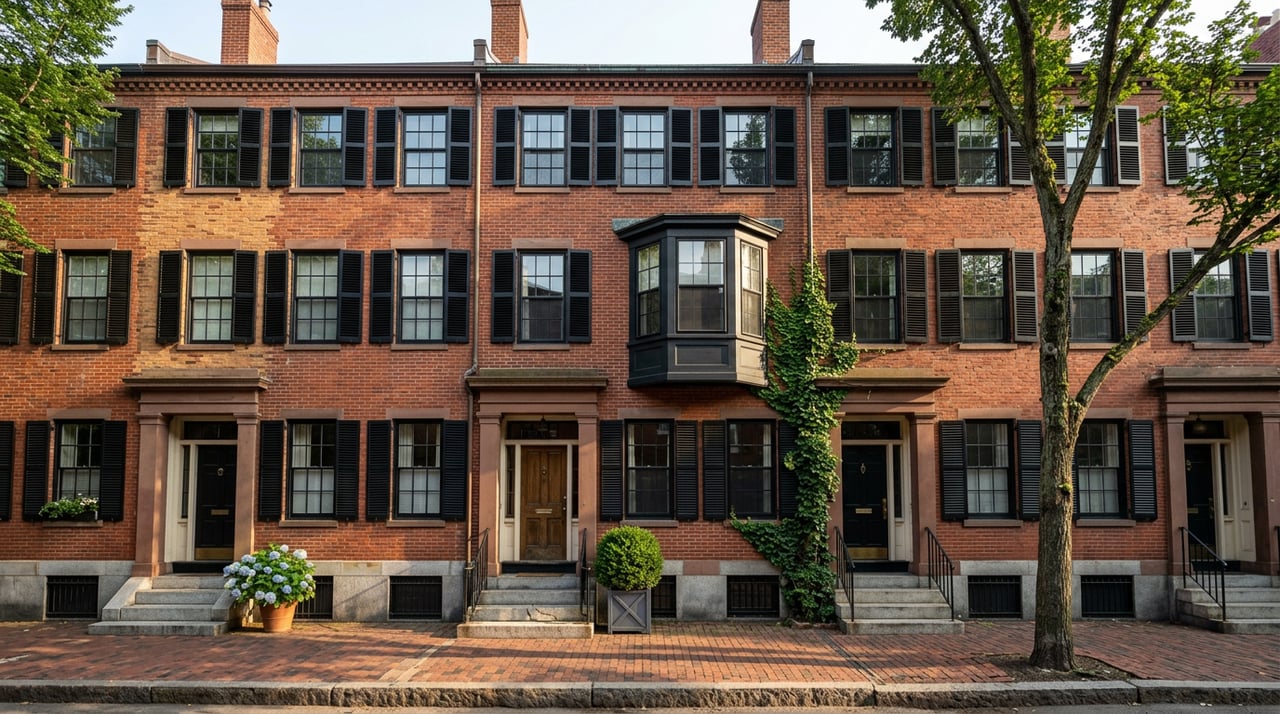
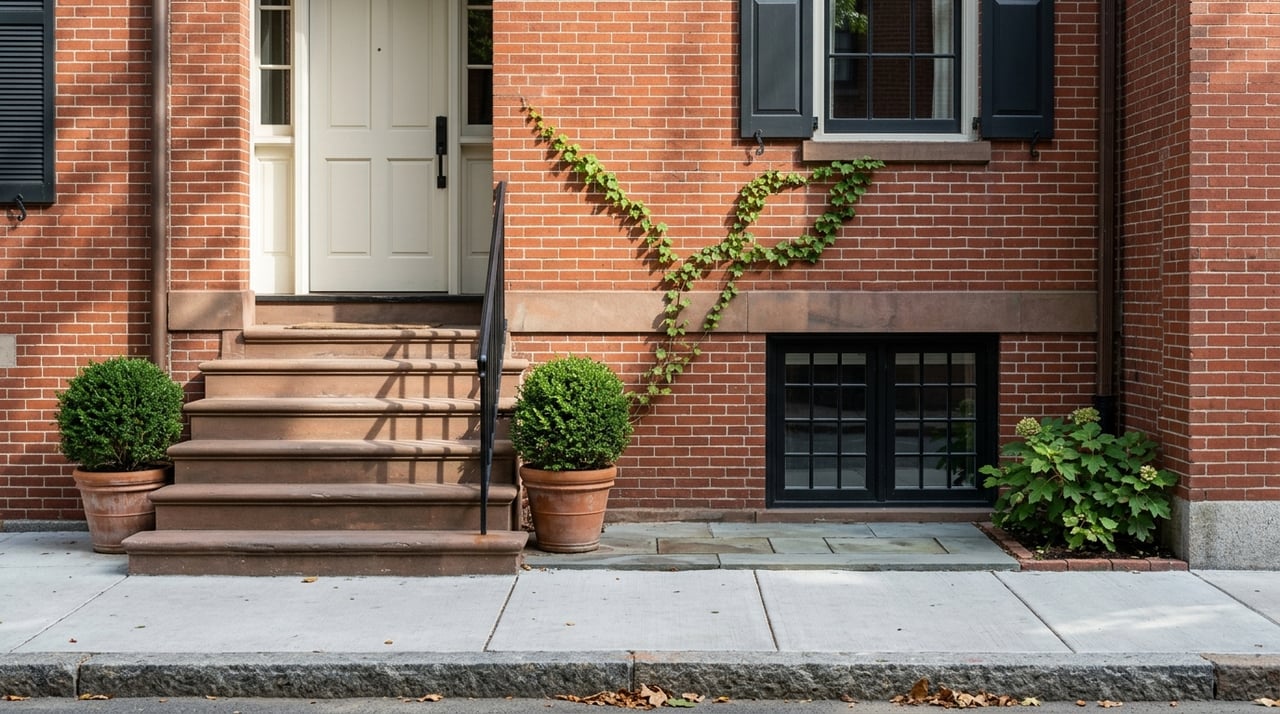
Boston Planning describes South End as the city’s largest Victorian residential district, defined by historic brick townhouses, small parks, and a mix of historic and publicly funded housing. In practical terms, that built form limits easy supply expansion and makes details like condition, floor plan, light, and location especially important.
The same profile reports 1,607 net new housing units completed from 2020 to 2025. It also shows that population growth averaged 1.6% per year from 2010 to 2025 and is projected to slow to roughly 0.0% per year through 2035.
That combination points to modest new supply relative to demand over time, not a flood of inventory. It helps support values, but it does not eliminate the need for smart pricing and strong positioning.
What Buyers Should Watch
If you are buying in South End, the current market can create opportunity, but only if you stay disciplined. Broad neighborhood medians are useful for context, yet they are not enough to value a specific home.
Instead, focus on recent comparable sales that match the property’s type, condition, layout, and building style as closely as possible. A polished two-bedroom condo in one section of South End may compete very differently from a unit with a less efficient layout or a longer list of updates.
You should also pay attention to time on market and price history. Homes that have lingered or reduced may offer more room for negotiation, while well-positioned listings can still draw fast, competitive offers.
What Sellers Should Know
If you are selling, this is a market that rewards strategy over optimism. South End still supports premium pricing for homes that are well prepared and priced in line with the most relevant recent sales.
But the data also show that aggressive pricing can backfire. With 27.8% of homes posting price drops and many closings landing below asking, an inflated launch price may reduce momentum and weaken your position later.
The best approach is usually a precise one. In a neighborhood with varied housing stock and design-driven buyer expectations, the right comparable sales matter more than the highest active listing you can find.
The Real Takeaway on South End Trends
South End’s recent sales and price trends are best understood as selective, stable, and highly property-specific. This is not a simple seller’s market, and it is not a market where buyers can assume every listing is negotiable.
Instead, it is a high-value neighborhood where some homes move quickly and close near or above ask, while others take longer and need adjustments. That kind of split market rewards careful analysis, realistic pricing, and a clear understanding of how your property fits into the current landscape.
Whether you are buying a condo, planning the sale of a townhouse, or simply trying to time your next move, the strongest decisions come from reading the data with nuance rather than relying on a single headline.
If you are considering a move in South End, Penney + Gould brings research-driven guidance, design fluency, and neighborhood-level perspective to help you navigate the market with clarity.
FAQs
What do recent South End sale prices show?
- Recent South End closed-sale data through May 2026 shows a median sale price of $1,287,067, up 0.9% year over year, which points to broadly stable pricing rather than rapid appreciation.
Why do South End market reports sound different?
- Different platforms often measure different things, with some focusing on closed sales and others on active listings, so South End can appear highly competitive in one report and softer in another without those views being truly inconsistent.
Is South End a buyer’s market or seller’s market?
- The safest reading is that South End is a mixed and selective market, where some homes sell quickly and close near or above asking while others sit longer and sell below list.
How fast are homes selling in South End?
- Recent data suggests many South End homes move relatively quickly, with median days on market around 23 according to Redfin, while some hotter listings can go pending in about 13 days.
What should South End buyers pay attention to right now?
- Buyers should look closely at recent comparable sales, a home’s time on market, and any price reductions because those details often reveal whether a listing is well aligned with current market demand.
What should South End sellers keep in mind when pricing?
- South End sellers should base strategy on the most relevant recent comparable sales because the neighborhood’s mix of condos, townhouses, layouts, and finish levels can make broad averages less useful for setting an asking price.